Open engineering
PS1 binary analysis, MIPS semantics and an independently reviewable recompiler/runtime.
Open-source PlayStation 1 research
Open-source PS1 binary analysis, MIPS R3000A validation, and static recompilation research.
Works today: Bounded recompilation and interpreter comparison, plus PS-X EXE/CHD analysis.
Not yet: Complete commercial-title AOT recompilation or playable native ports.
Start here: Read the FAQ, try the CLI, or pick a first contribution.
01 / Mission
Develop open, reviewable tools for authorized PlayStation game research, preservation and eventual re-releases. A reusable, maintainable recompilation foundation matters more than claiming early compatibility.
PS1 binary analysis, MIPS semantics and an independently reviewable recompiler/runtime.
Separate synthetic validation, real-title interpreter observations and native execution claims.
Reproductions, focused tests, design challenges and documentation are first-class contributions.
02 / Progress · snapshot 2026-10-20
Source baseline: main@551f50ab. This is a dated summary, not a live CI or compatibility counter. Draft PRs are not counted as landed work.
ATLUS logo and opening Japanese text rendered with OpenBIOS. Real-title visual evidence is interpreter-only.
Five-instruction PS-X EXE recompiles and runs with the alpha CLI. Not whole-game support.
Timed-out standalone runs, loaded-code mismatches and unverified visual parity are tracked in #768, #773, #774 and #806.
No confirmed title-screen or playable commercial-title native port. Milestone #351 remains open.
Detailed, scope-limited evidence: Persona E2E log · Capability matrix · Open issues
Japanese-language Issues and technical discussions are welcome. 日本語の参加ガイド
We welcome independent, critical human reviews. Specialists in PS1 BIOS and hardware, MIPS I, static recompilation, runtime integration, testing, and game preservation can contribute through a focused question, architecture review, or reproducible synthetic test—not only through large code changes.
Transparent AI use: the maintainer defines the direction, but AI coding agents are heavily used for coding, investigations, tests, documentation, and preliminary review. Automated CI is important bounded evidence, not a substitute for independent engineering review.
Current limits: Persona opening imagery comes from the OpenBIOS interpreter path. Title-screen progress, full commercial-game native AOT parity, and playable native ports remain unverified. Our proposed multi-platform plugin ecosystem is a long-term concept, not a shipped feature.
How to get involved Future RetroRecompStudio vision · Contributor guide
The OpenBIOS interpreter path now visibly reaches the opening of Megami Ibunroku Persona. VBlank-accurate captures show the ATLUS logo and narrative text referencing Zhuangzi's butterfly dream.
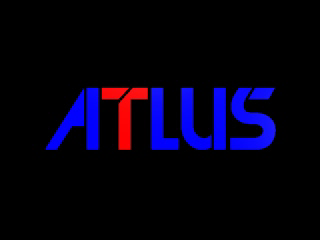
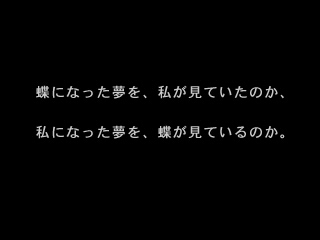
Scope: Verified game-rendered progression, not complete-title AOT recompilation, title-screen access, or playable compatibility. See capture evidence and implementation in PR #754. Imagery is limited interoperability research evidence; rights remain with their owners and this project is not ATLUS-affiliated. See the legal and asset policy for rights and contact guidance.
PSXRecompStudio is an open-source research toolkit for analyzing original PlayStation software and validating static recompilation techniques. It combines PS-X EXE and supported CHD analysis, MIPS R3000A execution models, deterministic recompiler validation, runnable generated-host artifacts, and partial PS1 Runtime hardware models.
It is a research platform, not a claim of complete commercial-game compatibility. The current project can prove bounded real-ROM-derived recompilation paths and classified execution outcomes, but it does not yet turn complete commercial PS1 titles into finished native ports.
psxrecomp recompile / psxrecomp run CLI with classified JSON results and privacy-safe diagnostic bundles.Domain logic, analysis, validation, tests, and managed interop code.
Cross-platform desktop application shell and future analysis workflows.
Native CPU, memory, and hardware-oriented components coexist behind a stable C ABI while semantics migrate incrementally to Rust.
A narrow managed/native boundary keeps C++ and Rust implementation details out of C#.
Choose a starting point below to explore the research, tools, and contribution opportunities.